
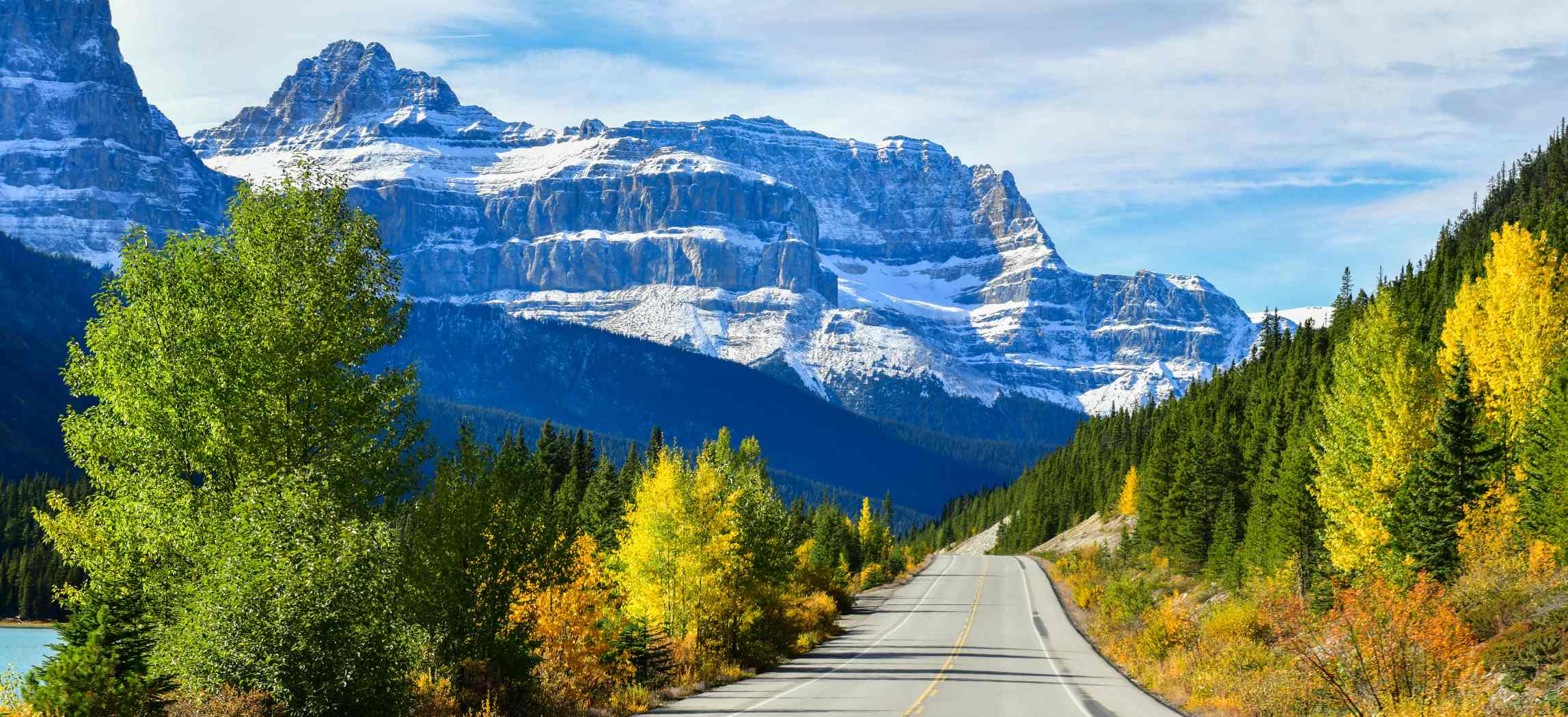
Connecting Banff, Lake Louise, and Jasper via Highway 93N (the Icefields Parkway) is one of the world's premier alpine drives. Balancing rugged Canadian Rockies wilderness with premium travel comfort requires a tactical approach to seasonal weather, strict vehicle restrictions, and competitive transit reservation systems.
Banff to Jasper road trip guide
1. Canadian Rockies route profile and itinerary strategy
The core driving corridor connects key hubs across major distance markers:
- Banff Town to Lake Louise: ~60 km (40 miles)
- Lake Louise to Jasper via Icefields Parkway: ~230 km (143 miles)
A continuous drive from Lake Louise to Jasper requires roughly three hours. However, a practical itinerary demands 8 to 10 hours to accommodate scenic pullouts, short trail walks, and wildlife delays. For an elevated experience, spread the drive over two days with an overnight stay near Saskatchewan River Crossing or the Columbia Icefield.
Driving north ensures the sun remains behind you, illuminating the glaciers, while major viewpoints sit on the right-hand side of the highway for easy pulling out.
Basecamp recommendations
- Banff Town (2–4 Nights): Best for dining, local thermal springs, and utilizing public transit networks.
- Lake Louise Area (1–3 Nights): Crucial for early-morning lakeshore access and immediate shuttle boarding.
- Jasper (2–4 Nights): Ideal for exploring Maligne Lake and experiencing a quieter, less commercialised park environment.
Vehicle sourcing tactics
An SUV equipped with high-quality all-season or winter tires offers optimal confidence, particularly during shoulder-season weather shifts. If flying into Calgary International Airport (YYC), booking a one-way rental that terminates in Edmonton (YEG) avoids backtracking, though it may incur a drop-off fee. Reserve vehicles months in advance if travelling between July and September.
2. RV and campervan logistics in Banff and Jasper
Travelling via Recreational Vehicle (RV) or campervan offers unparalleled freedom in the Rockies, but navigating these protected national parks requires strict adherence to seasonal rules, site sizing, and reservation timelines.
Crucial RV campsite reservation timelines
Illegal overnight parking or "boondocking" is strictly prohibited within National Park boundaries; you must sleep in a designated campground.
- Booking Windows: Parks Canada campsite reservations open in January for the entire summer season. Popular campgrounds with full hookups sell out within minutes of the launch window.
- Icefields Parkway Dry Camping: Most campgrounds along the Icefields Parkway itself (such as Mosquito Creek or Silverhorn Creek) are rustic or "dry" (no electricity, water, or sewer hookups) and operate strictly on a first-come, first-served basis or require individual mid-season booking. Ensure your house batteries and water tanks are filled before committing to these spots.
RV sizing restrictions and limitations
Your vehicle's total length dictates where you can physically drive and stay.
- The 24-Foot Threshold: Campervans and small motorhomes under 24 feet (7.3 metres) can easily navigate almost any parking lot, including tight mountain viewpoints.
- Large Rigs (30+ Feet): If driving a large Class A or Class C motorhome, or towing a fifth-wheel, you will face severe limitations. Switchbacks on roads like Mount Edith Cavell (Jasper) or the Takkakaw Falls access road have strict vehicle length bans.
- Turning Radius at Viewpoints: Popular spots like Peyto Lake or Mistaya Canyon have dedicated RV parking lanes. However, these fill by 10:00 AM. If the RV lane is full, you cannot use standard car spots and will be forced to skip the stop.
Mountain driving considerations for large rigs
- Brake Fade: The Icefields Parkway features sustained steep grades, particularly when descending the Big Bend hill near the Columbia Icefield. Heavy RVs should utilize low gears to engage engine braking, preventing the brakes from overheating and fading.
- Saskatchewan River Crossing: This is your primary mid-route dump station and water fill-up point but expect long queues during check-out hours (10:00 AM to 1:00 PM).
3. Weather, packing, and seasonal timing
Shoulder season conditions (May, June, and September)
- May to Early June: High-elevation sectors remain snowbound. Valley floors experience spring green-up, but alpine lakes dictate a different timeline.
- September: Cooler daytime temperatures give way to sub-freezing nights. This window features golden larch needles at high elevations and significantly reduced family crowds, though high-altitude mountain passes can receive sudden snowfall.
Alpine Lake thaw timelines
- Lake Louise: Typically remains partly or fully ice-covered until late May or early June, transitioning to its signature turquoise hue by mid-June.
- Moraine Lake: Thaws later than Lake Louise; early-season water levels remain low and the classic deep turquoise colour develops gradually as glacial silt feeds the basin via summer snowmelt.
Packing essentials
Rockies weather shifts rapidly across all elevations. Essential gear includes a moisture-wicking base layer, an insulating mid-layer (fleece or down), and a windproof, waterproof outer shell. Sturdy hiking boots with deep tread are mandatory; pack microspikes if tackling upper trails in May, June, or late September. Keep UV protection (sunglasses and sunscreen) accessible, as radiation intensifies at high altitudes.
4. Lake Louise & Moraine Lake shuttle logistics
Private vehicle restrictions
Private vehicles are barred from Moraine Lake Road during the operating season. Access is restricted to Parks Canada shuttles, Roam Transit, licensed commercial tours, or cyclists.
At Lake Louise, the lakeside parking lot remains open to private vehicles but fills completely before sunrise during peak summer. Utilizing the Park & Ride system eliminates parking uncertainty.
Parks Canada shuttle reservation system
The system requires parking personal vehicles at the Lake Louise Ski Resort Park & Ride. From there, dedicated shuttles transport visitors to both lakeshores.
- Primary Ticket Launch: A significant percentage of seasonal seats open for booking online in early spring.
- The 48-Hour Rolling Release: To accommodate shifting travel plans, Parks Canada releases a secondary block of rolling seats at a fixed time exactly 48 hours before departure. If initial dates show as sold out, monitor the online portal precisely at the rolling release window.
- The Lake Connector: Your shuttle ticket includes access to the Lake Connector bus, allowing seamless travel between Lake Louise and Moraine Lake once you have arrived at either lakeshore.
Beating the peak crowds
The highest concentration of visitors occurs from 10:00 AM to 4:00 PM. Target the earliest morning slots (departing near or just after sunrise) or the late afternoon windows. Evening visits benefit from softened light, clearing crowds, and calmer lake reflections.
5. Icefields Parkway driving logistics
Fuel, services, and navigation
Services are intentionally sparse along Highway 93N. Fuel is available at Lake Louise, Saskatchewan River Crossing, and Jasper Townsite. Fill your tank completely before leaving Banff or Lake Louise, as pricing at the Crossing carries a significant remote premium.
Cellular coverage is non-existent along the vast majority of the Icefields Parkway.
Critical Safety Step: Download comprehensive offline maps (via Google Maps or specialized GPS apps) and verify live road status via the Alberta 511 network prior to departure.
Park passes and regulatory compliance
A valid Parks Canada Discovery Pass or daily family pass is required to drive and stop within Banff and Jasper National Parks. Purchase this online in advance and display it clearly on your vehicle's dashboard to avoid enforcement penalties at park gates.
Wildlife etiquette and safety
The Parkway serves as a critical wildlife corridor for grizzly bears, black bears, elk, bighorn sheep, and mountain goats.
- Do Not Stop in Traffic: If a wildlife sighting occurs, pull completely off the highway into a designated paved pullout. Never halt your vehicle in a live driving lane.
- Remain Inside Your Vehicle: If viewing bears or wolves, stay inside your vehicle. Approaching or feeding any park animal is strictly illegal and carries heavy fines.
- Leave No Trace: Use wildlife-proof waste receptacles at all day-use areas to prevent habituating animals to human food.
6. Best stops and hidden gems on the Icefields Parkway
To pace your drive effectively, categorize stops by geography and scale. The mandatory visual highlights include:
- Bow Lake & Num-Ti-Jah Lodge: Historic lakeside vista offering immediate access from the highway.
- Peyto Lake: A short, paved uphill walk leads to an elevated viewpoint over a fox-shaped, glacial basin.
- Mistaya Canyon: A brief walk down a forested trail reveals deep, swirling potholes carved by glacial runoff.
- Columbia Icefield & Athabasca Glacier: The midpoint of the drive. Visitors can view the receding toe of the Athabasca Glacier from the trailhead parking lot or opt for a commercial glacier tour.
- Sunwapta Falls & Athabasca Falls: Powerful class-5 waterfalls located closer to the Jasper boundary, featuring canyon boardwalks and ancient rock formations.
[Lake Louise] -> Bow Lake -> Peyto Lake -> Mistaya Canyon -> Columbia Icefield -> Sunwapta Falls -> Athabasca Falls -> [Jasper]
Alternative hidden gems
If major viewpoints experience peak congestion, divert to lesser-known locations. Waterfowl Lakes offers spectacular, mirror-like mountain reflections right from the shoreline with a fraction of the foot traffic found at Peyto Lake. Similarly, stopping at unmarked gravel pullouts along the Saskatchewan River flats allows for solitary exploration of wide gravel braided riverbeds, away from tour bus crowds.
7. Planning traps and frequently asked questions (FAQs)
What are the most common planning mistakes?
Travelers frequently underestimate the scale of the parks, trying to pack Banff, Lake Louise, Moraine Lake, the Icefields Parkway, and Jasper into a tight 3-day window. This results in excessive driving and missed shuttle departures. Another common error is expecting fully thawed, blue alpine lakes or open high-elevation trails in May without accounting for the late-season mountain snowpack.
Do you need a reservation to visit Lake Louise?
You do not need a reservation to physically stand at the lakeshore. However, you absolutely need a timed reservation if you intend to secure a seat on the Parks Canada Park & Ride shuttle.
Is Lake Louise still frozen in late May/early June?
You do not need a reservation to physically stand at the lakeshore. However, you absolutely need a timed reservation if you intend to secure a seat on the Parks Canada Park & Ride shuttle.
Can you drive a personal vehicle to Moraine Lake?
No. Private vehicles are banned on Moraine Lake Road. Exceptions are granted only to visitors holding official commercial lodge bookings or valid accessibility placards.
Do Canadians need travel insurance for interprovincial travel to Alberta?
Securing supplemental travel insurance may be valuable even for Canadian residents crossing provincial borders. While the Interprovincial Reciprocal Billing Agreement covers basic physician and hospital visits, significant gaps exist.
Your home province’s healthcare plan typically will not cover:
- Air and Ground Ambulance: If you require emergency transport from a remote trail along the Icefields Parkway, an ambulance bill can easily cost hundreds to thousands of dollars out-of-pocket.
- Emergency Evacuation: Mountain rescue operations are highly specialized and can incur massive fees.
- Prescription Medications & Medical Equipment: Any drugs prescribed during an out-of-province emergency room visit are generally not covered.
Trip Cancellation and Interruption: If an unforeseen covered reason forces you to cancel your booked RV rental or high-end lodge accommodation, it may protect your wallet against non-refundable trip investments.
Disclaimer: This article is intended for general informational purposes only and does not constitute legal, medical, financial, or other professional advice. Allianz Global Assistance is not responsible for the use of external websites or the content or accuracy of external website information.
Related articles
Travel protected with Allianz Global Assistance
Or call us at 1-844-310-1578
to speak with one of our agents.
to speak with one of our agents.
Join our Community of Travellers!
Get great travel tips, updates and news straight to your inbox with our monthly eNewsletter.