Best scenic train routes worldwide

This guide serves as a curated gallery of the world’s most breathtaking rail corridors, designed for those who believe the best way to see the planet is through a panoramic window. Rather than treating a train as a mere link between cities, we focus on "anchor routes"—legendary lines that define the character of a landscape.

By prioritizing mountain passes, coastal cliffs, and deep wilderness over high-speed commuter tunnels, this guide helps you choose journeys that offer a cinematic, front-row seat to the natural world while bypassing the stress of airport security.
The most rewarding scenic train journeys tend to have a mix of:

  • Dramatic landscapes: high passes, glaciers, fjords, coasts, or deep wilderness.
  • Slow or winding sections where trains follow rivers, lakes, or cliff lines.
  • Large windows or panoramic cars, sometimes open‑air sections.
  • Daytime timings that maximise views instead of running all night.
  • Frequent photo stops or viewpoints at stations along the route.

In practice, that means prioritising mountain railways, coastal lines, and classic long‑distance railways over pure high‑speed corridors, then stitching them together using regional or high‑speed links.

Switzerland remains the global benchmark for scenic rail, with infrastructure that makes "no-flight" travel effortless.

Switzerland is the global benchmark for scenic train travel. Two famous routes dominate most wish‑lists:

  • Glacier Express (Zermatt–St. Moritz/Chur): An all‑day panoramic scenic train passing the Oberalp Pass, the Rhine Gorge, and endless viaducts. It’s slower and more “luxury tour” in style, with fixed reservations and meal service.
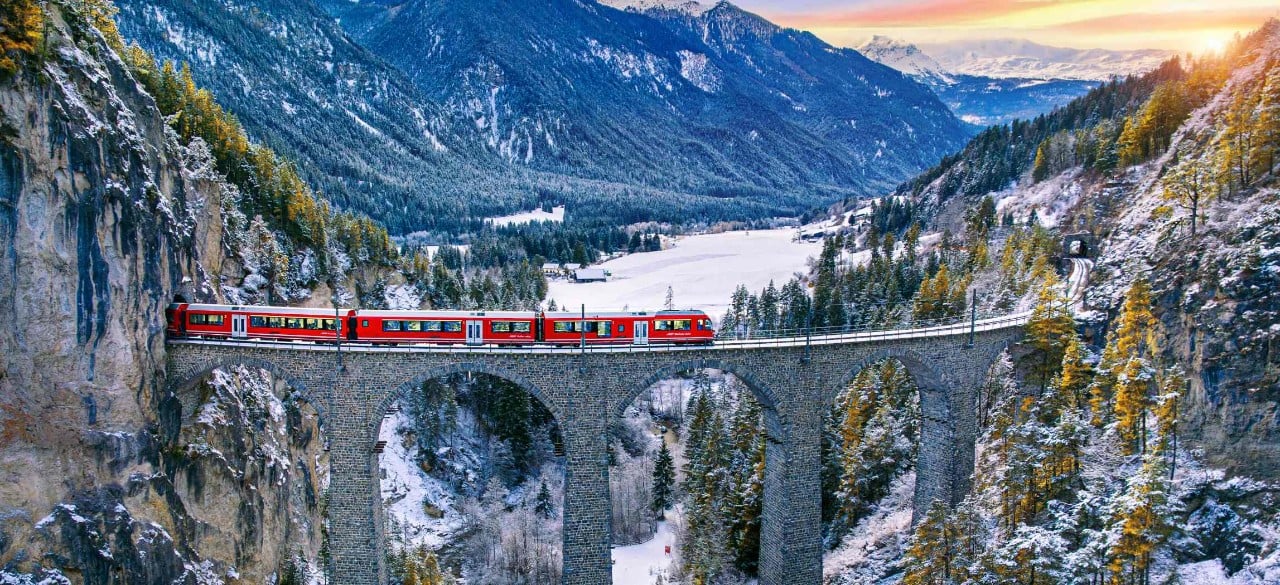
  • Bernina Express (Chur/St. Moritz–Tirano): Crosses the Bernina Pass, with close‑up glacier views and spiralling viaducts, then drops into Italy. Visually, it’s more varied and arguably even more dramatic than the Glacier Express, especially in clear weather.

Glacier Express vs Bernina Express: If you must choose one, the Bernina Express tends to feel more intense and diverse in a single day. The Glacier Express wins for the sense of a long, slow journey through the heart of the Alps. For a multi week trip, many travellers ride both and use them as scenic “bridges” between different Swiss regions.

The GoldenPass route (Lucerne–Interlaken–Zweisimmen–Montreux) links lakes, vineyards, and mountain passes. While the route is often discussed as one continuous rail journey, the modern GoldenPass Express provides a direct, "no-change" service specifically between Montreux and Interlaken using advanced gauge-changing technology. To complete the full journey to Lucerne, travelers will still enjoy a scenic transfer at Interlaken Ost onto the Zentralbahn to cross the Brünig Pass. Highlights of this multi-stage trip include:

  • Lake Lucerne and Brünig Pass between Lucerne and Interlaken.
  • Lakes Thun and Brienz around Interlaken.
  • The descent into Montreux with views of Lake Geneva and vineyard terraces.

Other superb lake and mountain routes include:

  • Lucerne–Engelberg and Lucerne–Göschenen along the old Gotthard line.
  • Interlaken–Lauterbrunnen/Grindelwald for access to Jungfrau region cable cars.
  • Montreux–Zweisimmen through the Pays d’Enhaut.

These run on standard Swiss railways, so you can mix scenic stretches with normal intercity trains without committing to a single packaged tour.

For a first Swiss rail trip of 7–10 days, a strong route could be:

Zürich (arrive) → Lucerne → GoldenPass to Interlaken → Jungfrau region base (Grindelwald/Lauterbrunnen) → Glacier Express to Chur → Bernina Express to Tirano (Italy).

This sequence maximises alpine, glacier, and lake scenery while exiting the country directly into Italy, all by rail. Agencies like Railbookers and others package similar itineraries, but you can also book point‑to‑point via the Swiss railway sites if you prefer DIY.

Norway’s signature rail route is the Bergen Line between Oslo and Bergen. It climbs above the tree line into a barren plateau, then drops toward the coast with sweeping vistas.

The famous Flåm Railway branches off at Myrdal and zigzags down to the Aurlandsfjord, with waterfalls passing within metres of the train. Together, they form the backbone of the popular “Norway in a Nutshell” route:

Oslo → Bergen Line → Myrdal → Flåm Railway → fjord cruise → Voss → Bergen.

You can expand this into a longer trip by adding the Rauma Line (Dombås–Åndalsnes) for more alpine and fjord scenery and using ferries and regional trains to move along the coast rather than flying between cities.

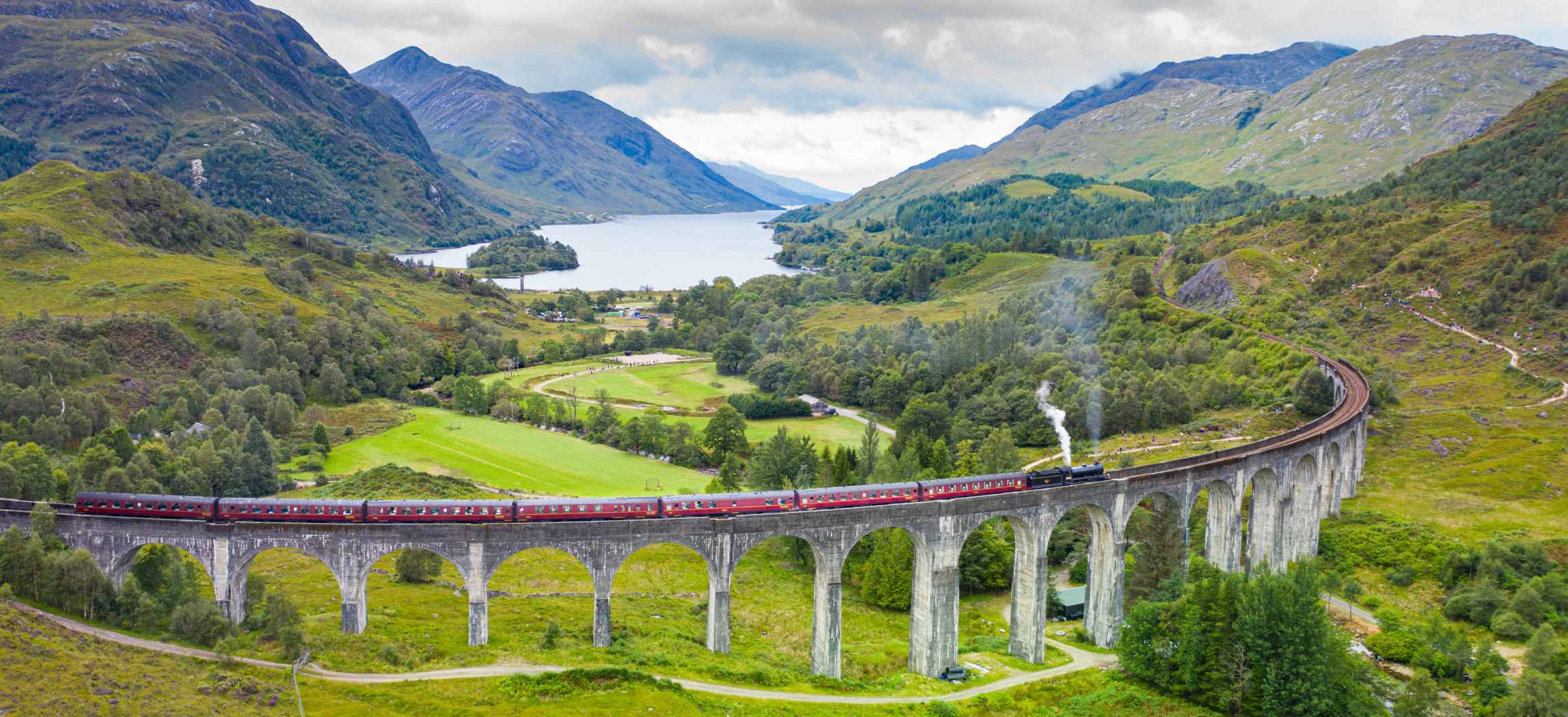
For Scotland, the undisputed star is the West Highland Line:

  • Glasgow–Fort William–Mallaig: Moorland, lochs, and the Glenfinnan Viaduct (of Harry Potter fame).
  • Glasgow–Oban: A beautiful branch that finishes at a harbour gateway to the Hebrides.

Other scenic Scottish railways include:

  • Kyle of Lochalsh Line from Inverness to the Isle of Skye’s gateway.
  • Far North Line from Inverness to Thurso/Wick for remote, wild landscapes.

You can arrive in the UK via London or a smaller hub, then use trains to reach Glasgow and Inverness. Once in the Highlands, you can spend days hopping between railway stations, ferry ports, and small towns without needing internal flights.

Booking Reality: In 2026, the vintage Jacobite Steam Train can be difficult to book due to high demand and ongoing regulatory requirements regarding heritage carriage door safety. Pro-Tip: Regular ScotRail diesel trains run the exact same tracks multiple times a day for a fraction of the cost, often with much more flexibility.

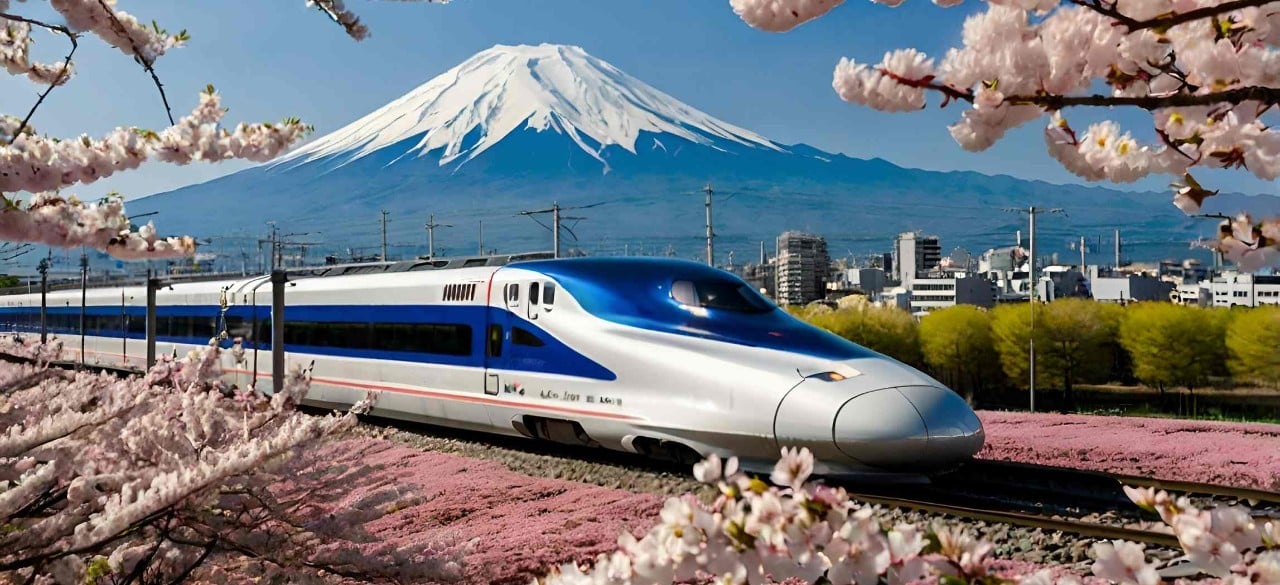
Japan’s Shinkansen network is designed for speed, but parts of it are surprisingly scenic: views of Mount Fuji between Tokyo and Osaka on clear days, or rural landscapes on the northern lines toward Tohoku and Hokkaido.

For the most memorable scenic train routes, consider:

  • The Hakone area (via Odakyu Railway and local lines) for Fuji views, lakes, and hot springs.
  • Limited‑express trains along the Japan Sea coast in the San’in region (e.g., Kyoto–Tottori).
  • The Gono Line in the far north, hugging wild coastline (requires more planning, but very rewarding).

While Japan Rail Passes make it simple to roam widely, significant price increases in recent years mean travelers should compare the cost against point-to-point tickets or regional passes (like the JR East or JR West passes), which often offer better value for scenic exploration.

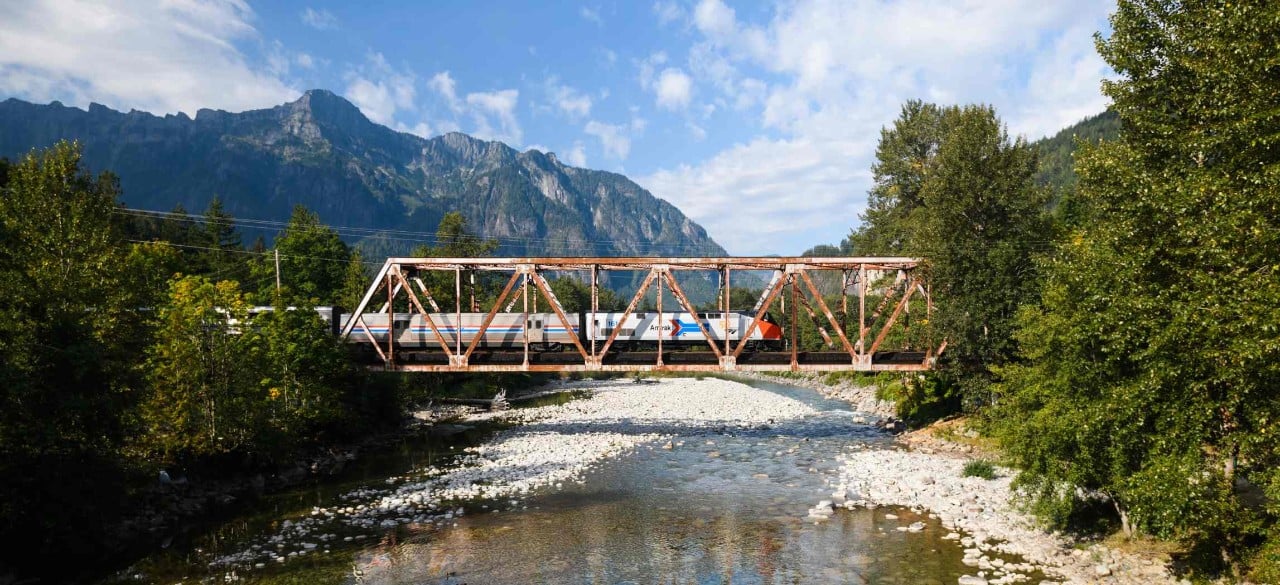
In the USA, the most scenic long‑distance Amtrak routes include:

  • California Zephyr (Chicago–San Francisco/Oakland): Rockies, canyons, Sierra Nevada — arguably the country’s best single scenic route.
  • Coast Starlight (Seattle–Los Angeles): Pacific coastline, especially between San Luis Obispo and Santa Barbara.
  • Empire Builder (Chicago–Seattle/Portland): Northern plains and mountain corridors near Glacier National Park.

These trains are slower than flying but ideal if you want days of wilderness scenery, sleeper cabins, and the experience of crossing entire regions without touching an airport after your initial arrival.

Note: Amtrak is currently modernizing its fleet. While the long-distance routes still use the iconic double-decker Superliner cars, look for new Amtrak Airo trainsets and 'Venture' cars appearing on regional routes to improve accessibility and comfort.

Norway’s signature rail route is the Bergen Line between Oslo and Bergen. It climbs above the tree line into a barren plateau, then drops toward the coast with sweeping vistas.

The famous Flåm Railway branches off at Myrdal and zigzags down to the Aurlandsfjord, with waterfalls passing within metres of the train. Together, they form the backbone of the popular “Norway in a Nutshell” route:

Oslo → Bergen Line → Myrdal → Flåm Railway → fjord cruise → Voss → Bergen.

You can expand this into a longer trip by adding the Rauma Line (Dombås–Åndalsnes) for more alpine and fjord scenery and using ferries and regional trains to move along the coast rather than flying between cities.

Italy combines Alpine crossings with some of Europe’s best coastal rail:

  • Bernina route into Tirano from Switzerland, then Italian trains onward to Milan and the lakes.
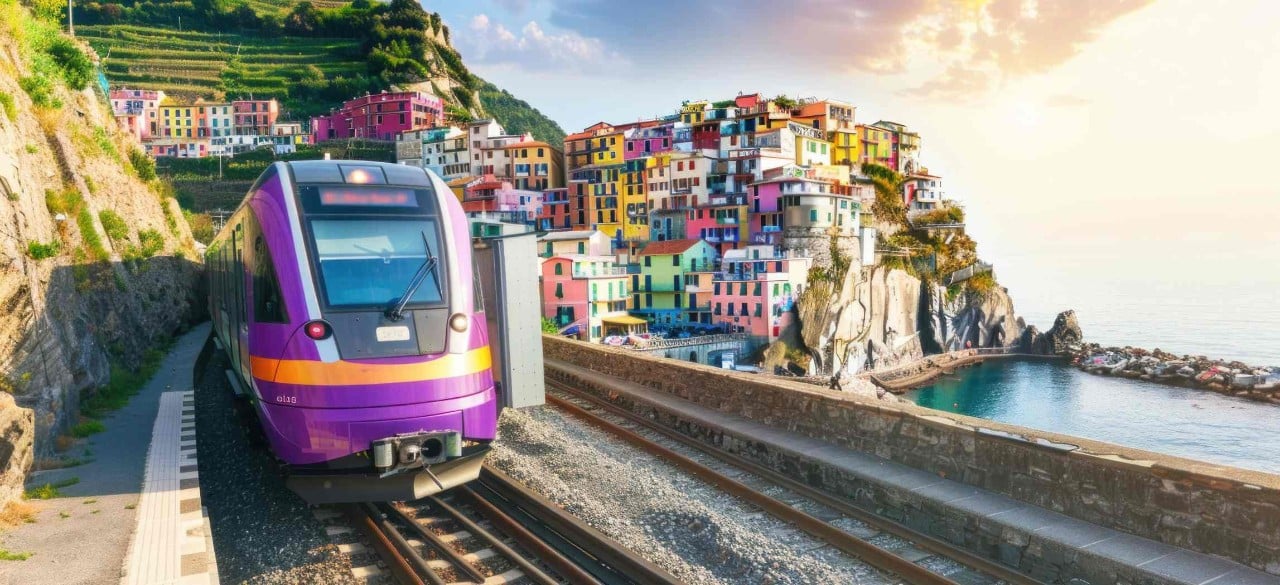
  • The Cinque Terre Line between La Spezia and Levanto hugging cliffside villages.
  • The line from Salerno toward Sapri and the Cilento Coast, used as a rail gateway to the Amalfi region (with buses and boats onward).

Spain, France, and Italy are linked by both high‑speed and regional trains, so you can weave scenic routes together: for example, France’s Mediterranean coast from Marseille to Nice, then Italy’s Riviera east to La Spezia and the Cinque Terre.

High‑speed trains are not always the most scenic, but they are ideal for connecting scenic regions without flying:

  • France: TGVs from Paris to the Alps, Riviera, or Atlantic coast, then slower regional lines into mountains (e.g., to Chamonix) or along beaches.
  • Spain: High‑speed AVE trains between Madrid, Barcelona, Seville, and Valencia, with slower routes into Galicia, Asturias, and the Basque Country for greener, more rugged coasts.
  • Italy: Frecciarossa and Italo trains linking Turin, Milan, Venice, Florence, Rome, and Naples, with regional branches to the Dolomites, coast, or smaller hill‑town areas.

This pattern lets you minimise time between scenic areas and avoid extra flights or long bus transfers.

If your aim is to step easily from culture to countryside:

  • In France, pair Paris with Chamonix or Annecy via the Alpine railways, or Paris with Nice and the Riviera rail.
  • In Spain, link Barcelona with the green north via trains to San Sebastián or A Coruña, or Madrid with Asturias and the Picos de Europa.
  • In Ireland, scenic stretches like Dublin–Westport, Dublin–Cork, and Dublin–Rosslare offer pastoral landscapes, seaside towns, and connections to ferries to Wales and France, letting you cross the Irish Sea without flying.

Using ferries between Ireland, Britain, and France, then continuing by rail across Europe, is one of the most effective ways to avoid extra airport hubs within Europe.

Because these bucket-list journeys often involve non-refundable luxury bookings, precise rail connections, and remote wilderness areas, protecting your investment is as vital as packing your camera. Travel insurance may provide a valuable safety net for the "what-ifs," such as a missed connection due to a technical delay, a sudden illness that interrupts a multi-country tour, or even the need for emergency assistance while traversing a remote mountain pass. For a seamless experience, look for a plan that specifically covers trip interruption and baggage delays, ensuring that a minor logistical hiccup doesn't derail the trip of a lifetime.

This article is intended for general informational purposes only and does not constitute legal, medical, financial, or other professional advice. Allianz Global Assistance is not responsible for the use of external websites or the content or accuracy of external website information.


Related articles
Travel protected with Allianz Global Assistance
Or call us at 1-844-310-1578 
to speak with one of our agents.
Join our Community of Travellers!­
Get great travel tips, updates and news straight to your inbox with our monthly eNewsletter.

Warning - The E-Mail Address configured for this form is either unverified or invalid. Please verify the E-Mail Address and try again later.

A verification E-Mail was sent to the following E-Mail addresses:

Kindly check the corresponding inbox for a verification E-Mail and verify it.

Click the "Submit" button to sign up for this eNewsletter - you can unsubscribe at any time.