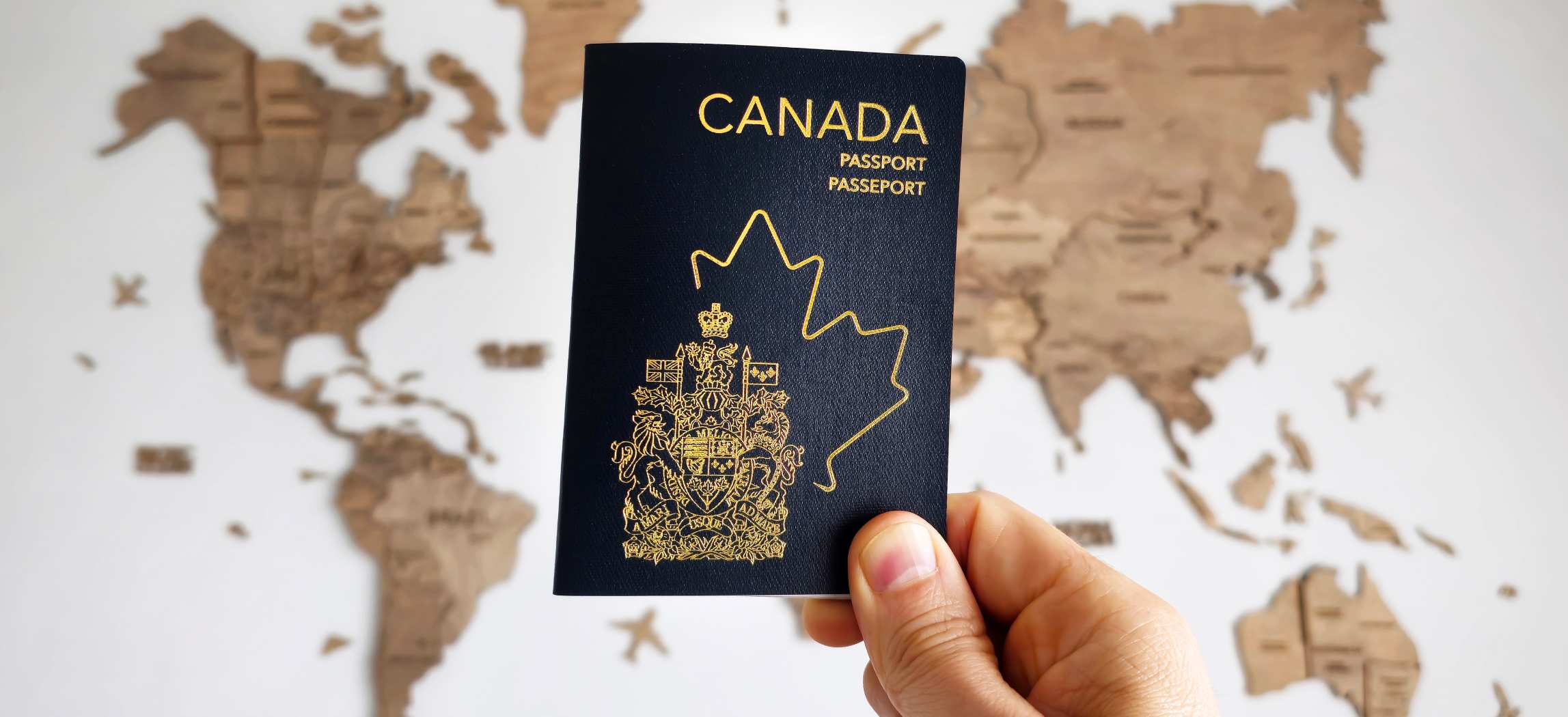
Losing a Canadian passport while outside Canada is both a travel and an identity-security emergency. A missing passport can be used for identity theft or illegal travel, so treat it as urgent — even if you are not travelling for several days.
Whether your passport was stolen, misplaced, damaged beyond use, or full, the process abroad is the same: report the loss, protect your identity, then submit a new passport application as quickly as possible.
Official steps for Canadians outside Canada
For most Canadians abroad, the step-by-step protocol is:
- Secure yourself and your belongings, then confirm the passport is truly missing.
- Report the loss or theft to the nearest Government of Canada office abroad.
- Decide whether you need a regular replacement passport, a temporary passport, or an emergency travel document.
- Gather the required documents, photos, guarantor, and references.
- Pay the applicable fees and submit your passport application.
- Monitor processing, pick up your new travel document, and take steps to reduce identity-theft risks.
What to do first after loss or theft
Report the passport to the nearest Government of Canada office
You can report a lost passport by phone or in person; many offices also provide online contact information. Once reported as lost or stolen, the passport is immediately cancelled and becomes invalid for travel or identification.
Contact:
- The nearest Canadian embassy, high commission, or consulate, or
- The Emergency Watch and Response Centre in Ottawa if you cannot reach a local mission.
Contact local police if needed
If your passport was clearly stolen (e.g., in a robbery or bag theft), file a local police report. A police report is not always strictly required, but consular staff may ask for one where crime or fraud is suspected.
A police report can:
- Support your passport application,
- Help with insurance claims, and
- Provide a record in case of identity-theft issues later.
Understand that the passport is cancelled once reported
Once you officially report a passport as lost or stolen, it is permanently cancelled and can never be used again — even if you later find it. If it turns up, return it to the Government of Canada or destroy it per consular advice.
Take basic identity-theft precautions: monitor financial accounts and keep copies of all reports and consular correspondence.
Apply for a new passport abroad
Use the correct application form for your situation
Adults replacing a Canadian passport outside Canada normally use form PPTC 040 – Adult General Passport Application. This applies whether your previous passport expired, is full, or was lost, stolen, or damaged.
In some circumstances — for example, if your lost passport was issued when you were 16 or older and this is your first reported loss — certain missions may accept form PPTC 482 (the simplified renewal form). Consular staff will advise which form applies.
Requirements abroad can differ slightly from applying in Canada. For a child, use the child application form (PPTC 042) instead.
Gather proof of citizenship and valid ID
You will typically need:
- Proof of Canadian citizenship (birth certificate or citizenship certificate), and
- A valid government-issued photo ID (driver's licence or another national ID).
If these documents were also lost or stolen with your passport, consular officials can advise on alternative evidence. Expect additional questions and possibly longer processing in those cases.
Prepare two passport photos and payment
Submit two identical, recent passport photos meeting Canadian specifications. Use a photographer familiar with Canadian passport photo rules and bring the printed requirements if needed.
Pay the required fees and attach proof of payment to your application. Payment options vary by country and office.
Emergency travel documents and temporary passports
When urgent travel qualifies for faster service
If you have urgent travel — an imminent flight, a medical emergency, or you must leave a country quickly — you may be eligible for an emergency travel document (ETD) or a temporary passport.
Consular staff will assess:
- How soon you must travel,
- Your destination(s), and
- Supporting evidence (tickets, medical notes, or official notices).
Not all missions can issue documents on very short notice, but they will advise what is realistically possible.
What additional proof may be required
For expedited service, be prepared to show:
- Confirmed travel itinerary (e-ticket or booking),
- Evidence of the emergency, if applicable, and
- A police report, if circumstances suggest theft or fraud.
How emergency documents differ from regular passports
A temporary passport is a limited-validity Canadian passport offering more travel flexibility than an ETD but not replacing a full-validity passport.
An emergency travel document (ETD) is usually:
- Valid for a very limited time,
- Restricted to specific route(s) and date(s), and
- Intended to get you to Canada or a single destination — not for multi-country trips.
Some countries may not accept temporary passports or ETDs, so check visa and entry requirements before travel.
Guarantor, references, and photo requirements
Who can act as a guarantor abroad
You need a guarantor who has known you personally for a minimum period and meets the eligibility criteria on the application form. Always consult the current Government of Canada guarantor guidelines or your local Canadian mission to confirm who qualifies.
Your guarantor must sign your application and one photo, and confirm the information is accurate. They do not have to be in Canada — many Canadians find a guarantor among other Canadians or eligible professionals abroad.
When a statutory declaration is needed
If you cannot find a qualified guarantor, you may complete a statutory declaration in lieu of guarantor (form PPTC 132) before a consular officer or authorised official, for an additional fee. This can extend processing times, so start early.
Photo rules and common rejection reasons
Canadian passport photos must meet precise size, background, and quality rules. Double-check specifications on the official Government of Canada website and show them to the photographer.
Common rejection reasons:
- Incorrect size or head position,
- Shadows, patterns, or coloured backgrounds,
- Smiling, tilting, or wearing non-permitted glasses or headgear, and
- Poor image quality (blurring, pixelation, or uneven lighting).
Fees, submission, and pickup
Pay the required passport and replacement fees
Fees depend on:
- The type of document (full-validity passport, temporary passport, or ETD), and
- Whether your previous passport was still valid when lost or stolen (surcharges often apply).
Always rely on the official Government of Canada fee list or the website of the embassy or consulate where you apply.
Submit the application to the nearest Canadian office abroad
Once your application is complete:
- Submit in person where required (common for urgent service), or
- Follow specific mail-in or drop-off instructions if permitted.
Some locations work through Visa Application Centres or partner offices, but the Government of Canada always makes the final decision.
How pickup or return of documents works
You may need to pick up your new document in person, particularly for imminent travel. Otherwise, the office may return it by courier or registered mail.
Processing times vary significantly by country, season, and application type. If you have upcoming travel, inform staff clearly so they can advise whether an emergency option is needed.
Questions about replacing a passport abroad
Can you travel without a regular passport?
In most cases, airlines and border officials will not allow Canadians to travel internationally without a valid travel document. If you cannot wait for a full-validity passport, your options are:
- A temporary passport, or
- An emergency travel document limited to specific travel.
A driver's licence or photocopies of your old passport are not sufficient for international travel.
What if you cannot find a guarantor?
Inform the Canadian embassy or consulate. They may allow a statutory declaration in lieu of guarantor (form PPTC 132), though this can involve extra questions, fees, and time.
In all cases, the most reliable, up-to-date information on requirements, forms, and fees is on the official Government of Canada website or provided directly by the Canadian office handling your application.
Disclaimer: This article is intended for general informational purposes only and does not constitute legal, medical, financial, or other professional advice. Allianz Global Assistance is not responsible for the use of external websites or the content or accuracy of external website information.
Source: Canada.ca
Related articles