
Ready to tackle the trek of a lifetime? Check out these famed distance hikes across Europe and what you should know before you go. Happy trails!
6 Multi-day hikes & treks in Europe
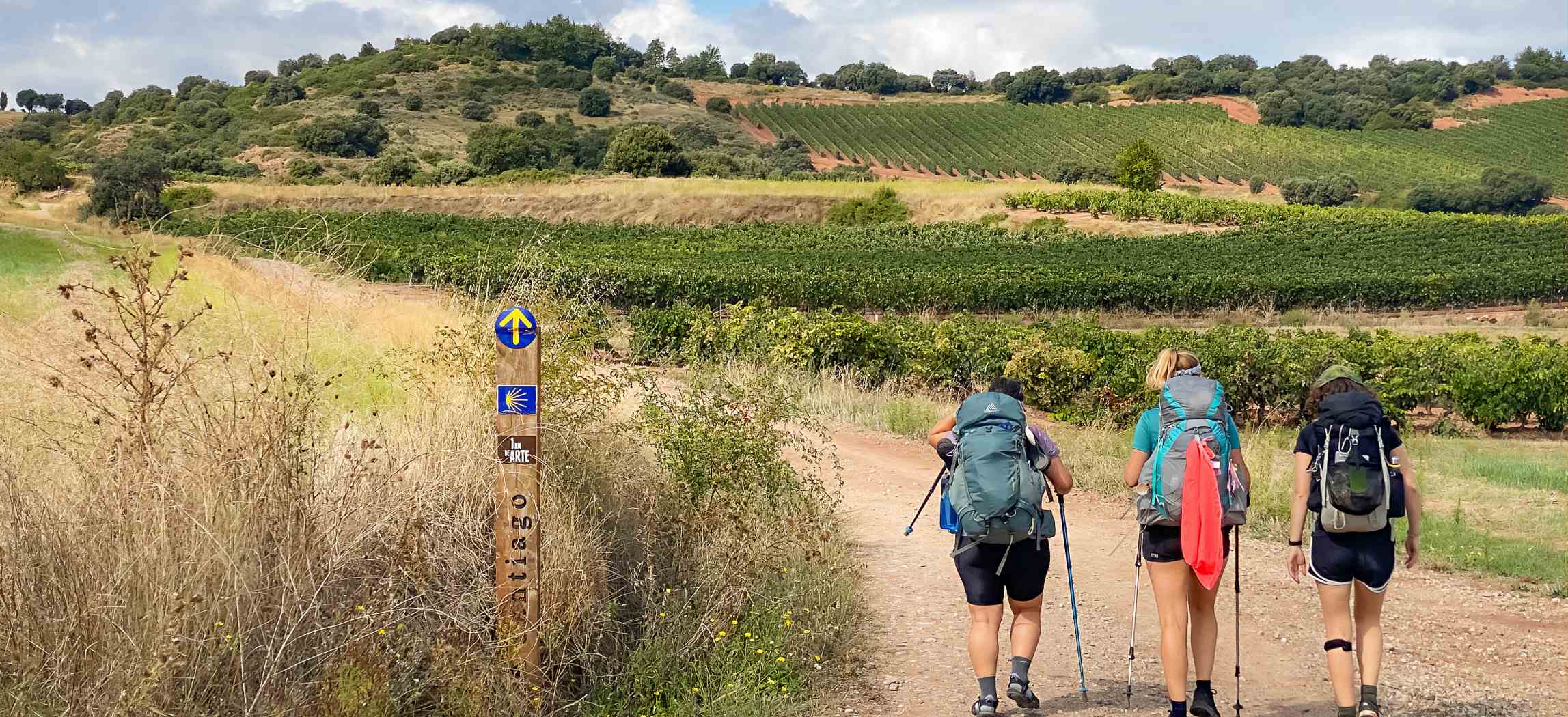
El Camino de Santiago, Portugal and Spain
One of Europe’s most iconic distance hikes, El Camino de Santiago is actually a combination of multiple walks, or caminos. The seven routes trace the steps of pilgrims who traveled through western Europe to the Tomb of St. James the Greater since the Middle Ages.
Today, the routes draw both recreationists, as well as people making the trek for spiritual reasons. Spanning between Lisbon and Portugal, the inland route of the Camino Portugués is less-traveled than the popular Camino Francés.
The 10- to 13-day 150-mile Camino Portugués is also an ideal route for hikers who prefer to not carry a tent and other gear. Along the way there are affordable accommodations for pilgrims called albergues. Lovers of history will appreciate passing through medieval towns and landmarks like the 13th century Tui Cathedral.
Know before you go: Spain and Portugal are known for their relatively mild Mediterranean climates, but the region around the Tomb of St. James is known to be rainy. Keep track of conditions on the routes with the Camino Weather site.
Menalon trail, Greece
High in the mountains of the Peloponnese peninsula, the nearly 47-mile Menalon Trail isn’t nearly as frequently travelled as some of the most well-known distance routes in Europe. And that's part of the charm.
Much of the route includes paths walked by ancient Spartans, and winds through quaint, historic villages and past monasteries built into cliffs. The Menalon is the Greece that’s far away from white sand beaches, resorts or the bustle of Athens, writes hiker Tim Mathis.
The Menalon is estimated to take roughly eight days to complete and connects nine historic villages between Stemnitsa and Lagkadia. More info on what to expect and planning your route between stages can be found on the official Menalon Trail site.
Know before you go: Book your accommodations in each stage well ahead of time, especially in the very small towns. Also, wild camping is illegal in Greece, so you must secure a room for each stay of your hike. Plan your hike during the shoulder season, as summer in the region can be extremely hot and it regularly snows in the winter.
West Highland Way, Scotland
Spanning 96 miles between Milngavie to Fort William, this classic route takes you through quintessential Scottish countryside. Imagine deep lochs, rocky peaks in the mountains of Glencoe, moorlands and glens.
Along the way, stop in Scottish villages to enjoy stays at local inns or hostels and a hearty meal at a pub. Or, you can camp at designated campsites, or pitch a tent most places along the way to sleep in the Scottish wilds under the stars.
Expect hiking the West Highland Way to take anywhere from five to seven days. Known to be a good route for those fairly new to distance hiking, the West Highland Way is well-marked and fairly easy-going, particularly in the southern sections. But, at least a moderate level of fitness is needed for steeper sections in the northern highlands, such as Conic Hill and the Devil’s Staircase.
Know before you go: The best time of year to hit the trail is from April to September, with May and June being less rainy (for Scotland). Avoid hiking in August, as biting insects known as midges come out in force that month.
Tour du Mont Blanc, France, Italy, Switzerland
“Views over sparkling glaciers, Alpine prairies and lots (and lots!) of cheese awaits anyone who embarks on this border-crossing trek,” writes Ashley Parsons for Lonely Planet.
This nearly 106-mile route through the Alps circles the range’s largest peak, Mont Blanc, and passes through France, Italy and Switzerland. Tour du Mont Blanc generally takes a week to ten days to complete, depending on your pace. As expected, the snow-covered peaks and lush valleys are spectacular.
Each col, or mountain pass, offers unique scenery. The Col du Bonhomme spans the protected alpine lands of the Contamines Nature Reserve, France’s highest nature reserve, and green pastures in Beaufortain. “The Col Grand Ferret, at the end of the remote Val Ferret, … brings a long, steep climb – and a descent on the other (Swiss) side that’s rolling and blissful,” Parsons writes.
You can wild camp, but if you want to avoid carrying tents and cookware on a trail with constant ascents, you can stay at refuges, or mountain dwellings, along the way. Each mountain hostel has a gardienne, or caretaker. A huge bonus is that the meals are known to be delicious — cue the cheese!
Know before you go: This trek is best for experienced distance hikers. You need to be ready to walk long stretches, with constant ascents, for a week or more. A guided tour, with an advertised slower pace, can take some of the stress off of planning and avoids a time crunch.
This 14-day extended tour offers a longer stop to explore the Italian mountain town of Courmayeur, or simply rest with a glass of wine and a good book. Your luggage is also transferred to the next inn.
Laugavegur trail, Iceland
Listed as one of the 20 best hikes in the world by National Geographic, the Laugavegur Trail, or hotsprings route, spans 34 miles over four to five days. The route “introduces you to an astonishing diversity of landscapes: colourful rhyolite mountains, thermal pools, glaciers and volcanic slopes carpeted in emerald green moss,” writes Much Better Adventures.
Don’t be fooled by the short distance — this multi-day hike is rigorous. Expect steep climbs and daily river crossings, over roughly five to seven hours a day of hiking. You will also have to carry all of your gear because the trail is off-road. Tent camp or sleep in hiker huts along the way.
Know before you go: As many as 100,000 people hike Laugavegur annually, most in July and August. If you want to avoid big crowds, try to go in June or September.
Dolomite's classic hut-to-hut trekking, Italy
Winding through the heart of the Italian Dolomites, the Alta Via 1 represents the quintessential European hut-to-hut trekking experience. Spanning roughly 120 kilometers (75 miles) from the emerald waters of Lago di Braies down to Belluno, this world-renowned trail weaves through towering pale limestone peaks, vast alpine meadows, and historic World War I tunnels. Hikers are treated to sweeping, dramatic vistas of famous massifs such as Lagazuoi, Pelmo, and Civetta, making every climb up a high-mountain pass instantly rewarding. (Detailed trail maps and stage breakdowns can be found on the Alpine Exploratory Alta Via 1 Guide).
What truly elevates this journey is Italy’s network of mountain huts, or rifugi. Positioned strategically along high ridges and serene alpine valleys, these high-altitude lodges eliminate the need to haul heavy tents, sleeping pads, or cooking stoves. After a rigorous day of ascending scree paths and col passes, trekkers step into warm, welcoming sanctuaries offering hot showers, cozy dormitory or private rooms, and hearty multi-course Italian meals—featuring steaming polenta, hearty ragù, fresh apple strudel, and local wine shared around communal tables.
Unlike technical via ferrata routes that require climbing harnesses and helmets, the classic Alta Via 1 is accessible to any physically fit hiker comfortable with steep terrain and sustained daily altitude gains. Taking roughly 9 to 11 days to complete, the trail strikes a balance between rugged alpine wilderness and authentic mountain hospitality, solidifying its reputation as one of the premier bucket-list multi-day hikes in the world. (For official regional logistics, visit the South Tyrol Tourism Portal).
Know Before You Go: Successfully undertaking a multi-day trek requires preparation beyond simple physical conditioning. Book mountain huts and accommodations several months in advance (often 6 to 9 months prior), as it tends to fill up quickly for peak summer months (July through August). Keep your pack light—aiming under 10–12 kg (22–26 lbs)—by prioritizing technical layers, high-quality rain gear, and broken-in trekking boots rather than duplicate outfits.
Always carry sufficient local cash, as remote mountain refuges often lack reliable card processing, and download offline topographical maps alongside carrying a compass back-up.
For unpredictable high-elevation wilderness make sure to check local weather services daily and aim to start your trekking days early to reach your destination before mid-afternoon alpine thunderstorms roll in.
Dolomite's classic hut-to-hut trekking, Italy
You never know when a medical emergency can happen, especially in remote areas with rugged terrain. An Allianz Global Assistance Travel insurance plan with emergency medical coverage provides 24/7 assistance by phone and online and may also cover medical evacuation, treatment and additional medical transport if needed.
You should also know that if you experience a medical emergency outside of your home province or territory, your provincial or territorial health insurance plan may not fully cover you. Travel insurance by Allianz Global Assistance may help fill the insurance gap.
Get a travel insurance quote today to see how we can help you travel with more peace of mind.
This article is intended for general informational purposes only and does not constitute legal, medical, financial, or other professional advice. Allianz Global Assistance is not responsible for the use of external websites or applications, or the content or accuracy of external information or technologies.
Related articles
Travel protected with Allianz Global Assistance
Or call us at 1-844-310-1578
to speak with one of our agents.
to speak with one of our agents.
Join our Community of Travellers!
Get great travel tips, updates and news straight to your inbox with our monthly eNewsletter.