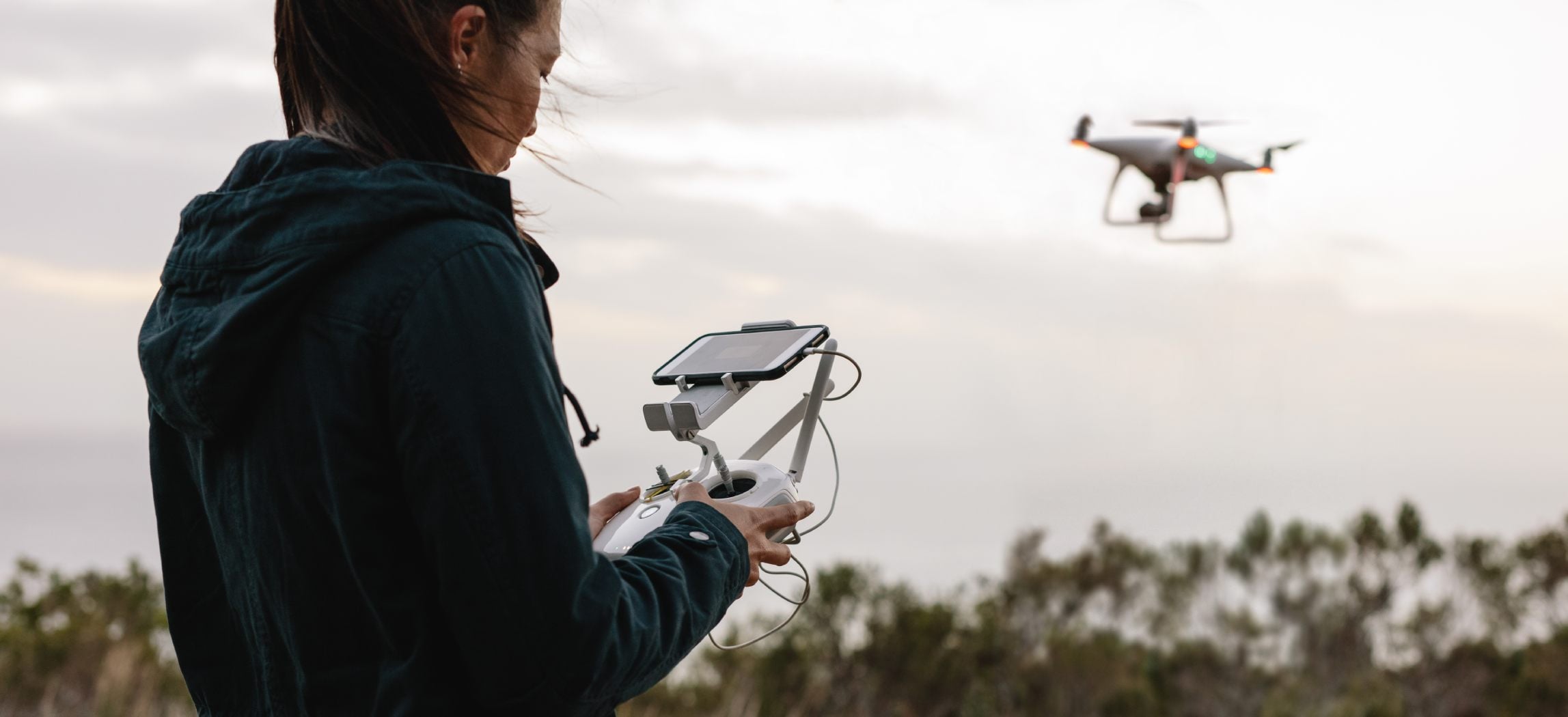
The ultimate drone travel guide

Interested in traveling with your drone, but unsure of how to prepare? An important factor to consider is checking if the travel protection you plan to purchase covers the total value of your drone in case it gets mishandled by the airline or stolen during your trip. The amount covered under these situations varies significantly across insurance providers.

Whether your goal is to capture incredible photos and video footage, share your journey on social media, or record a personal vlog, following a structured checklist ensures a safe and enjoyable experience.

Before booking flights or accommodation, run through this baseline travel checklist to prevent costly surprises at the airport or upon arrival:

  • Check drone travel insurance limits: Confirm the policy covers your drone’s full value if it’s mishandled, damaged, or stolen during transit.
  • Verify import and entry rules: Research whether you need to declare the drone at customs, or if the destination country restricts bringing drones across the border.
  • Confirm registration and operator requirements: Ensure you meet local operator registration rules (especially for drones weighing over 249 grams).
  • Review airline battery policies: Confirm how the airline handles drones and lithium-ion batteries (carry-on vs. checked limits).
  • Prepare documentation: Keep proof of purchase, operator registrations, and insurance documents easily accessible on your phone or in print.

Before flying outdoors in a new country, you must verify the specific spatial boundaries and regulatory limits enforced by local civil aviation authorities. Missing a local restriction can lead to severe fines, confiscation, or legal liability.

  • Standard Ceiling (400 ft / 120 m): In most jurisdictions—including the U.S. (FAA), Canada (Transport Canada), and EASA member states in Europe—recreational drones are restricted to a maximum altitude of 400 feet (122 meters) Above Ground Level (AGL).
  • Structure Extensions: Some regions allow higher flights if you stay within a specific horizontal radius of a tall structure (for instance, 100 feet above a building in Canada during specific authorized operations), but default to the 400 ft limit unless explicitly authorized.
  • Airport Buffer Zones: Never fly near airports, aerodromes, or heliports. Most countries mandate a strict exclusion zone (typically 3 to 5 nautical miles / 5.6 km from major airports and 1 nautical mile / 1.9 km from heliports).
  • Airspace Authorization Apps: Use official airspace mapping applications (such as B4UFLY/LAANC in the US, NAV Drone in Canada, or local EASA-compliant apps) to check real-time controlled airspace statuses and request automated flight authorizations when permitted.
  • National Parks & Heritage Sites: Flying for recreation is strictly prohibited across national parks and protected historic sites in many countries (including Parks Canada locations and U.S. National Parks) unless you obtain a rare special permit.
  • Critical Infrastructure & Public Events: Avoid flying over power plants, military bases, government buildings, border crossings, or emergency response scenes.
  • Crowds & Assemblies: Drones are generally prohibited from flying directly over crowds, outdoor concerts, or advertised public events without specific advanced certification or permits.
  • Requirements depend heavily on your drone's weight category (e.g., sub-249g microdrones vs. 250g+ small drones) and operator classification:
  • The Global Drone Regulation Database: A reliable resource for up-to-date international laws. Search your destination or click on the interactive world map to view guidelines and official authority contact info.
  • United States (FAA): Drones weighing over 0.55 lbs (250g) must be registered with the FAA before flying outdoors. Drones weighing 249g or less flown purely for recreation under the Exception for Limited Recreational Operations are exempt from both FAA registration and Remote ID requirements (unless heavy accessories push the takeoff weight over 249g).
  • Canada (Transport Canada): Drones weighing between 250g and 25kg require drone registration and a Pilot Certificate (Basic or Advanced). Foreign visitors flying 250g+ drones must apply for a Special Flight Operations Certificate (SFOC). Microdrones (under 249g) are exempt from registration and licensing but must still be flown safely away from hazards.
  • European Union (EASA States): Drone rules are standardized across EASA states by risk category (Open, Specific, Certified). Most operators must register in their first EU destination country, attach their Operator ID to the drone, and complete online pilot training.
  • Mexico: Flying over historical sites, crowds, and animals is prohibited. Drones over 250g must be registered with AFAC (formerly DGAC); however, because registration requires Mexican citizenship or residency, foreign tourists are legally limited to flying sub-249g microdrones recreationally.
  • The Caribbean & Island Territories: Island regulations vary widely. In The Bahamas, foreign visitors must register their drone online with the Civil Aviation Authority (CAA-B) and receive a permit prior to arrival. Drones are completely prohibited or restricted in certain nations (such as Cuba or Barbados), so verify local laws before bringing a drone through customs.

To help you fly legally and safely in unfamiliar terrain, execute a systematic pre-flight workflow every time you take off:

  • Step 1: Confirm Flight Authorization & Permits – Verify if your destination requires operator registration, a local pilot certificate, or a Remote ID signal.
  • Step 2: Re-Check Airspace & Cached Maps – Check real-time no-fly zones and local weather (wind gusts, visibility). Pro Tip: Cache flight maps in your drone app ahead of time so you can navigate offline in low-coverage areas.
  • Step 3: Inspect Hardware Readiness – Check propellers for hairline fractures, confirm firmware updates are installed, and verify compass/IMU calibration.
  • Step 4: Execute Safety & Emergency Protocols – Review emergency action plans before powering up. Confirm fail-safe behaviors like Lost Link / Return-To-Home (RTH) triggers, establish clear contingency landing spots if battery levels drop unexpectedly, and perform a brief briefing if flying around a crew or visual observer.
  • Step 5: Establish a Safe Takeoff & Landing Zone – Select a flat, clear launch site away from bystanders, trees, power lines, and metal structures that cause magnetic interference.
  • Step 6: Set Operational Fail-Safes – Program your drone’s maximum altitude limit (e.g., capped at 120m/400ft) and set the Return-To-Home (RTH) altitude higher than the tallest obstacle in your immediate surroundings.
  • Step 7: Keep Paper & Digital Records On-Hand – Have digital or printed copies of your registration certificate, local authorizations, proof of insurance, and battery safety documentation ready in case local law enforcement or park rangers ask.

Proper packing ensures your gear stays protected and passes airport security checkpoints without delays.

Swipe to view more

CARRY-ON LUGGAGE (Cabin)
CHECKED BAGGAGE (Cargo)
 
• Drone body & camera • Extra propellers  
• ALL Spare LiPo/Lithium Batteries (terminals taped/capped) • Camera mounting tools & accessories  
• Power banks & remote controller • Small repair toolkits & screwdrivers  
• Hard drive & memory cards • Empty hardshell case (if checking drone body)  

Always consult IATA and airline transport rules for both your departure and arrival countries:

  • Spare Batteries BELONG in Carry-On: Loose or spare lithium-ion batteries are strictly prohibited in checked baggage by the FAA and most global airlines due to thermal runaway risks. They must travel with you in the cabin.
  • Check Watt-Hour (Wh) Ratings: Most airlines allow spare lithium-ion batteries under 100 Watt-hours (Wh) in carry-on luggage without prior approval (a standard DJI Mini or Mavic battery falls well below this limit). Batteries between 100Wh and 160Wh usually require airline approval, and anything above 160Wh are banned on passenger aircraft.
  • Protect Battery Terminals: Cover exposed battery contacts with electrical tape or place each battery inside an individual fire-retardant LiPo safety bag or protective sleeve to prevent short-circuiting during transit.
  • Inspect for Battery Damage: Never board an aircraft with swollen, leaking, punctured, or dented batteries. Replace damaged batteries prior to travel.
  • Airport Security Tip: Place spare batteries in a separate bin during security screening so inspectors can clearly see the Wh labels and protected terminals.

Regardless of your ultimate destination, secure comprehensive travel insurance that includes emergency medical coverage, trip cancellation, and baggage benefits. Trusted global providers like Allianz Global Assistance offer 24/7 emergency assistance to support you throughout your trip.

Disclaimer: This article is intended for general informational purposes only and does not constitute legal, medical, financial, or other professional advice. Allianz Global Assistance is not responsible for the use of external websites or the content or accuracy of external website information.


Related articles
Travel protected with Allianz Global Assistance
Or call us at 1-844-310-1578 
to speak with one of our agents.
Join our Community of Travellers!­
Get great travel tips, updates and news straight to your inbox with our monthly eNewsletter.

Warning - The E-Mail Address configured for this form is either unverified or invalid. Please verify the E-Mail Address and try again later.

A verification E-Mail was sent to the following E-Mail addresses:

Kindly check the corresponding inbox for a verification E-Mail and verify it.

Click the "Submit" button to sign up for this eNewsletter - you can unsubscribe at any time.