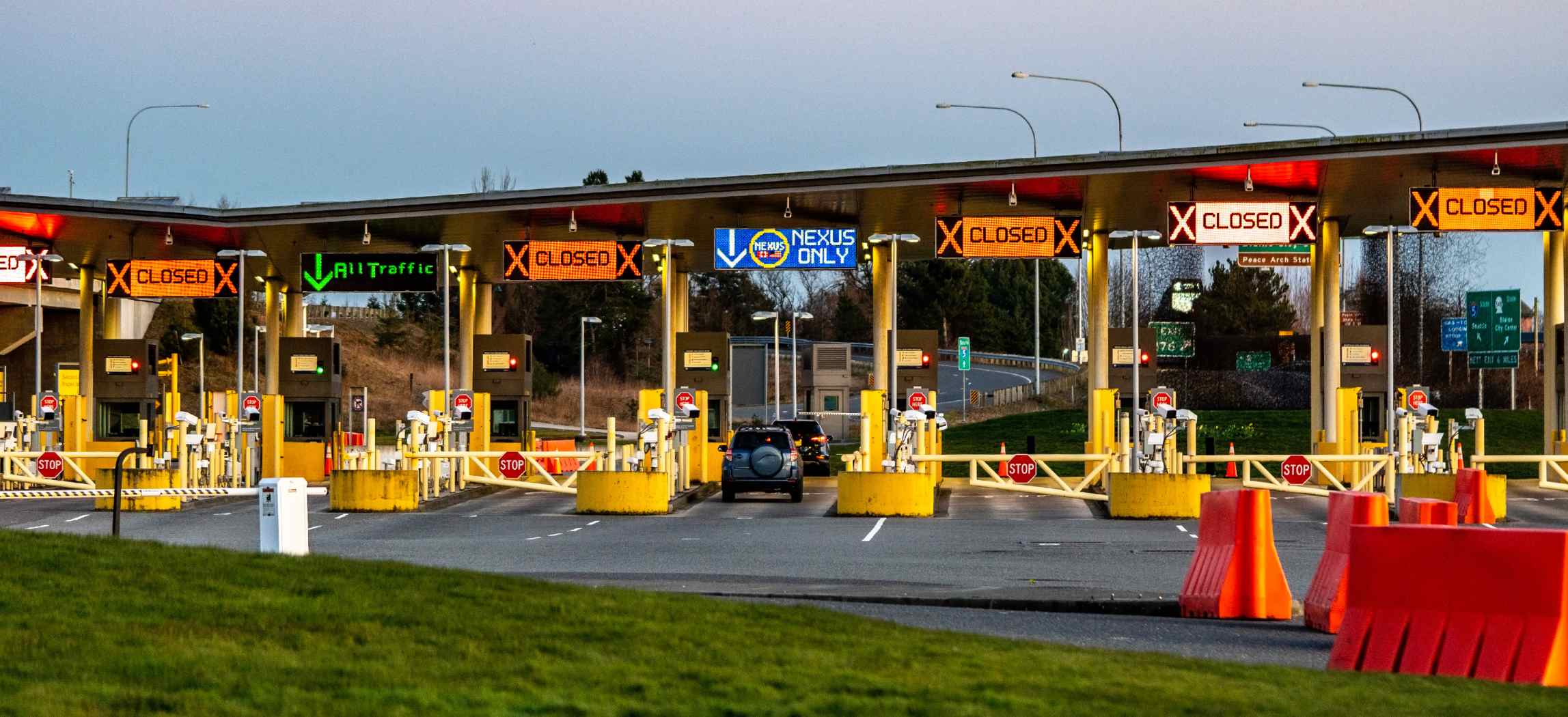
Both CBSA and CBP require that goods be for personal use—quantities a family could reasonably consume, not bulk amounts that suggest commercial import. Carrying too much can trigger stricter rules, permits, and higher duties.
Two main factors determine what you can bring duty free: trip length (Canada's exemptions apply at 24, 48, and 7+ day thresholds) and product type (food, alcohol, and prescription medications each have distinct restrictions). Regulations change regularly—always check the latest CBSA/CFIA and CBP/USDA guidance before you travel.
CBSA personal exemptions when returning to Canada
Less than 24 hours: No exemption
If you leave Canada for less than 24 hours, you generally have no personal exemption when you return Canada. That means:
- All goods, including food and alcohol, are potentially subject to duties and taxes.
- In practice, small purchases may sometimes be waived at the officer’s discretion, but you should not count on it.
- Alcohol and tobacco usually cannot be imported free of duty and taxes on trips under 48 hours.
You must still declare everything you bring Canada, even if the value is low.
More than 24 hours: CAN$200 limit
After 24 hours but less than 48 hours outside Canada, you typically have a CAN$200 personal exemption:
- You can bring goods worth up to CAN$200 duty free.
- Alcoholic beverages and tobacco products are not normally included in this 24‑hour exemption. If you bring them, they are subject to duties and taxes from the first unit.
- The goods must be in your possession when you arrive at the border.
If a single item exceeds CAN$200, you cannot split its value to fit the exemption; you will pay duty and taxes on the full value of that item.
More than 48 hours and more than 7 days: CAN$800 limit
For trips of 48 hours or more, you usually qualify for a CAN$800 exemption per eligible traveller:
- Goods worth up to CAN$800 can typically enter duty free, including a limited quantity of alcohol and tobacco (described below).
- For absences of 7 days or more, the same CAN$800 limit applies, but some items can be delivered to your home later and still count toward the exemption.
If you exceed your exemption, you may still bring the goods, but you will pay duty and taxes on the excess amount. Families returning together may sometimes have their exemptions “pooled” for practical purposes, but you cannot legally combine exemptions to cover a single high‑value item that exceeds one person’s limit.
Alcohol limits for travellers entering Canada
Wine, spirits, and beer limits
If you are of legal drinking age in the province or territory where you enter, and you have been outside Canada for at least 48 hours, you may typically bring the following amounts duty free as part of your CAN$800 exemption:
- Wine: Up to about 1.5 litres (roughly two standard 750 ml bottles), OR
- Spirits: Up to about 1.14 litres (one large “40 oz” bottle), OR
- Beer / ale: Up to about 24 cans or bottles (each about 355 ml), or roughly 8.5 litres total.
This is an “either/or” structure. You cannot usually double all three categories and keep them all duty free. You can mix categories in small amounts, but the overall total is meant to be equivalent to one normal allowance.
If you bring more alcoholic beverages than the personal allowance, you must declare all of it and pay any applicable duties, taxes, and provincial markups.
Provincial age and liquor rules
Legal drinking age in Canada is 18 in Alberta, Manitoba, and Québec, and 19 in all other provinces and territories. Your ability to carry alcohol duty free depends on:
- Your age under the law of the province/territory you enter.
- Additional provincial liquor board rules about how much alcohol you may import personally.
In some provinces, if alcohol is not purchased from the provincial liquor authority, additional provincial fees may be charged on top of federal duty and taxes when you exceed your allowance.
What counts as alcoholic beverages
“Alcoholic beverages” generally means drinks with more than about 0.5% alcohol by volume, including:
- Wine and fortified wine
- Spirits and liqueurs
- Beer, cider, hard seltzers, coolers, premixed cocktails
Homemade alcohol and unlabelled containers can cause problems and may be seized, particularly if CBSA cannot verify the alcohol content or safety. Keep all bottles sealed and labelled.
Prescription medication rules for Canada entry
Original container and labeling
To carry prescription medications into Canada smoothly, keep them:
- In the original pharmacy container, with a clear label showing your name, drug name, strength, and dosage instructions.
- Ideally accompanied by a copy of the prescription or a letter from your doctor, especially for drugs that may be controlled or for injectable medications.
Unlabeled pill organizers are not forbidden, but they make it harder for officers to verify the drugs and can delay your entry. The safest approach is to travel with medicines in original packaging whenever possible.
90-day supply or single course of treatment
Health Canada guidance usually allows travellers to bring:
- Up to about a 90‑day supply of a prescribed medication for personal use, or
- A single course of treatment if the course is shorter than 90 days.
This applies to most prescription drugs and many over‑the‑counter medications, provided they are legal in Canada and clearly for your own use. Larger quantities can be viewed as importation rather than personal carry.
For travellers heading the other direction (into the U.S.), CBP and the U.S. Food and Drug Administration (FDA) generally also expect that prescription medications be limited to about a 90‑day personal supply, in original containers, with supporting documentation. Rules are stricter for controlled substances.
Visitors, residents, and controlled substances
Both Canadian residents and foreign visitors must respect Canadian drug laws:
- Some prescription medications that are legal in one country might be controlled or prohibited in Canada.
- Narcotics, stimulants, benzodiazepines, and other controlled drugs face stricter limits. You may be asked for detailed documentation, and some products can be refused entry even with a prescription.
- Always declare prescription medications if asked and be prepared to explain their purpose.
When in doubt, check Health Canada’s guidance and, if necessary, speak with your doctor and pharmacist before you travel.
Food and groceries from the U.S. into Canada
Personal-use food rules
Canada allows many everyday groceries for personal use, especially:
- Commercially packaged, shelf‑stable products such as dry pasta, rice, cereal, candy, snacks, cookies, and canned goods.
- Most baked goods, roasted coffee, tea, and non‑meat condiments.
You must still declare all food you bring Canada, but routine items in small quantities for family consumption are frequently allowed, provided they meet CFIA safety and origin rules.
Product-specific restrictions
Restrictions are tightest on animal and plant products:
- Meat and meat products: Fresh, frozen, dried, or cured meat, including homemade meat dishes, have complex rules that change with animal disease outbreaks and country of origin. Some may be prohibited or strictly limited.
- Dairy and eggs: Cheese, milk, butter, and eggs from the U.S. may be limited by quantity and type. Certain soft or raw‑milk cheeses can be restricted.
- Fresh fruits and vegetables: Some are allowed; others are banned or restricted due to plant pests. Rules can differ based on the U.S. state of origin.
- Pet food: Often restricted if it contains ruminant meat or by‑products, and it must usually be in original sealed packaging.
Because these rules change frequently, check the latest CFIA information for specific meats, dairy products, and produce before you shop.
Declaration and inspection requirements
Any food, plant, or animal product must be declared to CBSA at the border, even if you believe it is allowed. That includes:
- Groceries, snacks, and drinks
- Seeds, bulbs, cut flowers, and houseplants
- Pet food and treats
Officers may inspect your groceries and seize prohibited items. Failure to declare can lead to fines and can complicate future travel, even for products that would have been allowed if honestly declared.
Bringing food into the United States from Canada
Agricultural declaration rules
When entering the U.S. from Canada, you must declare all food and agricultural products on your CBP customs form and verbally to the officer. That includes:
- Snacks, sandwiches, and leftovers in your car
- Fresh and packaged groceries
- Pet food, plants, and soil
Many items are permitted, but CBP wants the opportunity to inspect them. Declaring up front is essential; not declaring—even allowed food—can result in fines.
Meat, dairy, produce, and plants
CBP and USDA rules focus on protecting American agriculture:
- Meat and meat products: Fresh, dried, or cured meats are often restricted or prohibited, especially beef, pork, and poultry, unless in approved canned or fully cooked shelf‑stable products.
- Dairy: Hard, pasteurized cheeses in small quantities are often allowed; raw milk and some soft cheeses can be restricted.
- Fresh fruits and vegetables: Many are banned or seasonally restricted based on pest risks. An apple or orange that seems harmless may still be seized if it is not allowed from your point of origin.
- Plants, seeds, and soil: Frequently require permits or are prohibited. Potted plants and soil are common seizure items.
Because allowed items vary by product and origin, always check CBP and USDA‑APHIS guidance if you plan to bring specific fresh foods.
What CBP and USDA inspect at the border
CBP officers, often with USDA specialists, routinely inspect:
- Coolers and bags containing meat, cheese, or fresh produce
- Any foods you list on your declaration
- Items flagged by x‑ray or canine units
Commonly prohibited or seized items include homemade meat sandwiches, sausages, raw poultry, fresh citrus and stone fruits, plants with soil, and unlabeled food. Declaring everything and keeping receipts and labels visible makes inspection much faster.
This article is intended for general informational purposes only and does not constitute legal, medical, financial, or other professional advice. Allianz Global Assistance is not responsible for the use of external websites or applications, or the content or accuracy of external information or technologies
Related articles